The short answer
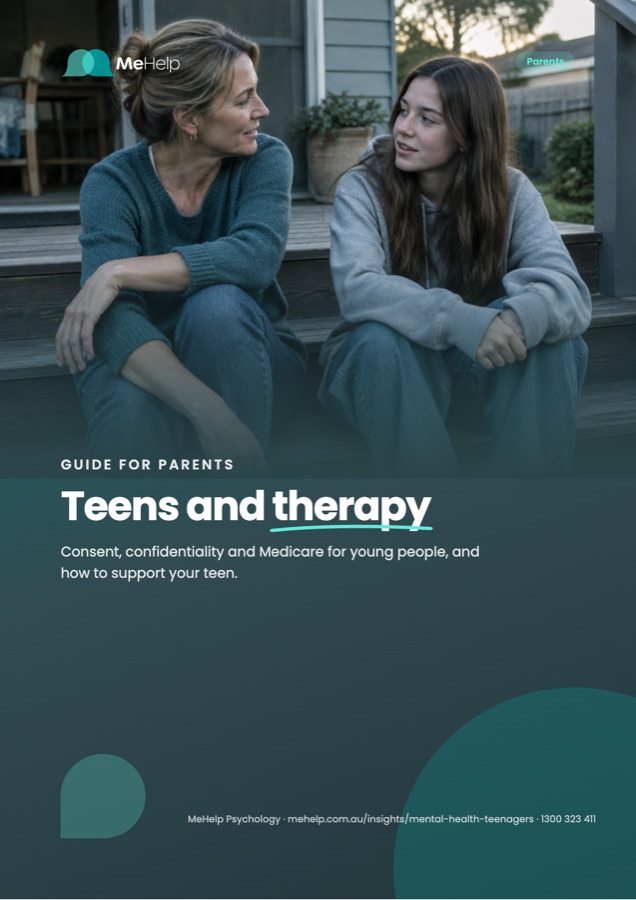
Teens and therapy: a guide for parents
Young people can use Medicare-rebated psychology with a Mental Health Treatment Plan and referral, just like adults. From around 14, a young person may be able to consent to their own care if they understand it, and at 15 they can get their own Medicare card. Psychologists balance a teen's privacy with keeping parents informed about safety. MeHelp sessions are by phone or video, which many young people find easier.
A look inside
From the guide
Consent and privacy
Who decides
The law recognises that young people gain the right to make their own health decisions as they mature.
Under about 14
Parents usually involved
A parent or guardian usually consents to treatment and is involved in sessions and planning.
From about 14
Mature minor
A young person who understands their care may be able to consent themselves. Their psychologist assesses this.
What parents are told
Psychologists aim to keep what a teen says private, because trust is central to therapy. They'll usually agree with the family at the start what will be shared, such as general progress. If there's a serious risk to the young person's safety, parents or others will be told.
Common questions
What people ask
Can my teenager see a psychologist without my consent?
From about 14, a young person who understands their care may be able to consent themselves. Psychologists assess this case by case.
Will the psychologist tell me what my teen says?
Usually not in detail. You'll typically agree at the start what's shared, and you'll be told if there's a serious safety concern.
Can teenagers use a Mental Health Treatment Plan?
Yes. The same Better Access rules apply, with up to 10 rebated sessions a year.
What's the youngest age for online therapy?
It depends on the psychologist and the young person. Many psychologists see teens online. Younger children often do better with a parent involved.
Evidence
Sources we checked
Last reviewed 21 October 2026 by Phillipa Brown, registered psychologist and founder of MeHelp. This page is general information, not individual advice.